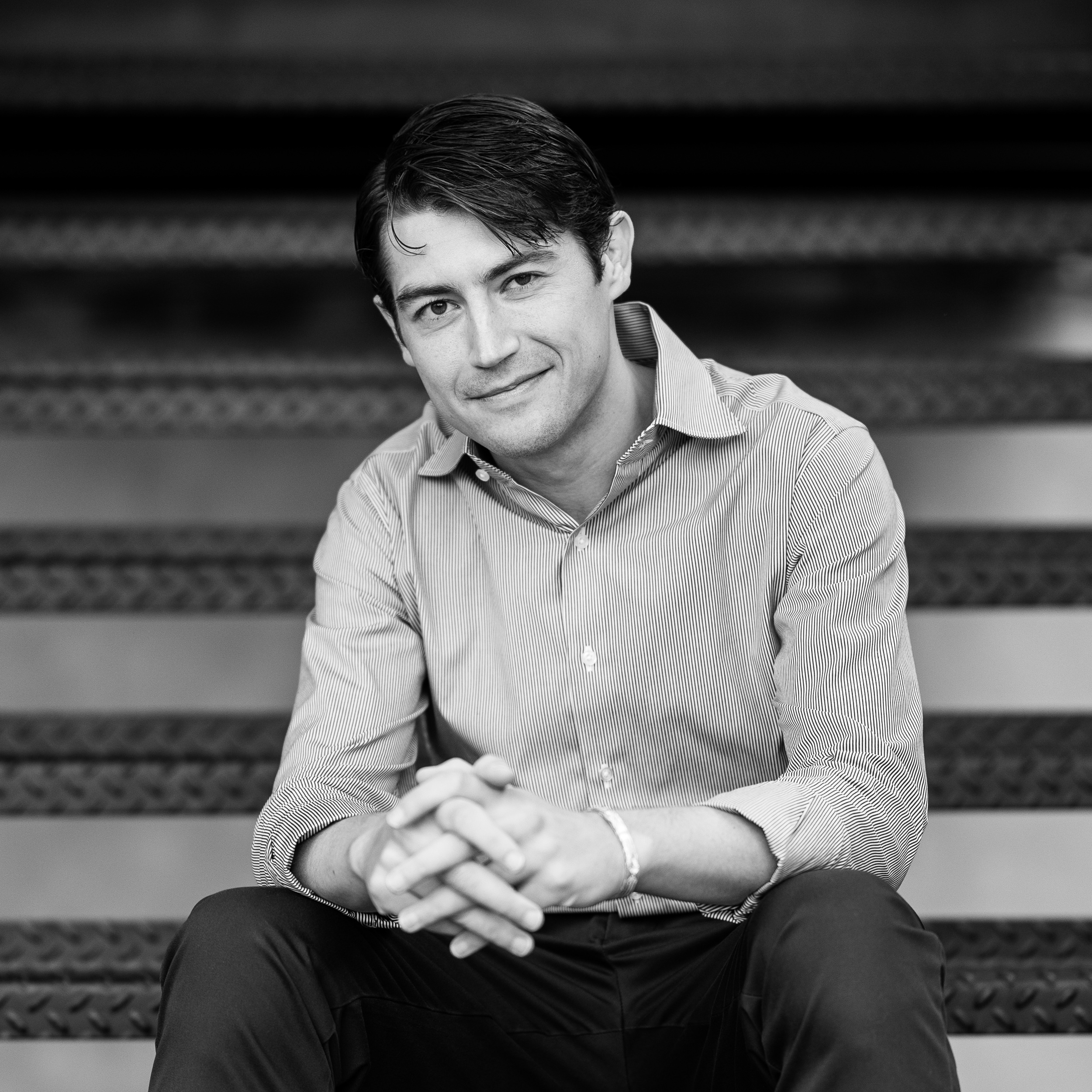
Zero-trust hope:
AI and the optimism of responsibility
Zero-trust hope: Finding optimism in an AI future by claiming responsibility
as the scientists making AI possible.
Like many people in technology, my passion for math and science began early.
I started coding at 10, taught myself calculus at 13,
and enrolled in a variety of university math courses during high school.
I was also an avid reader of science fiction, which primed me to think about
the future of AI as an eventuality rather than as a myth.
Even still, technology was not my first career.
I spent most of my 20s in the military,
where I combined a desire to solve real-world problems
with a background in Chinese language in an eventual role as a Green Beret.
But my experiences in the defense community convinced me
that the tides of global conflict were shifting.
In the unfolding era of near-peer threat,
it seemed clear that AI technology was becoming the central point of competition.
In early 2019, with this insight in mind,
I began spending my time outside of military duties educating myself on ML development.
I started building simple projects focused on ML for automated theorem proving,
which reintroduced me to my mathematical roots.
In 2023, I opted to leave the military to complete a degree in math and focus on ML science.
When I then enrolled as an undergraduate at the University of Connecticut,
I hadn't taken a math course since I was 16.
But since I had a strong math background,
I jumped into some graduate courses and fell back in love with math.
I also began working as a researcher under the
Milky Way Laboratory
in the University of Connecticut Department of Physics.
There, I applied my ML knowledge to astrophysics in creating
IRIS—a large
research project aimed at uncovering the hidden structure of our galaxy's center.
When I left the military in 2023, I did so under the belief that
as AI competition and risk were becoming the central problems of national security,
the technology sector itself was becoming the most impactful place to be.
I feel that insight was correct, and feel that I made the right migration.
But a couple years out of the military is also enough time to broaden in perspective.
I continue to see AI as an issue of national security.
But I also now think that framing is too narrow.
Now, I'd characterize AI considerations first and foremost as ones of human security.
Having graduated from the University of Connecticut with my BS in Mathematics in 2026,
both my military and academic days are behind me.
My sole focus is now in industry, and my new mandate is simple.
I'm just fighting the war that I see happening in the way that I think makes sense.
I'm concerned about the impacts of AI on our shared human future.
I'm concerned about how AI can be used in the hands of bad actors,
about erosion by AI of the job market and global economic stability,
and about misalignment of AI motives with human interests.
But I'm also optimistic that we can navigate these risks as a society,
because our future isn't at the mercy of a dice roll.
As an ML scientist, I understand AI technology.
As a member of an extended defense community, I understand risk.
And I'm convinced that the only realistic way to address AI risk
is through AI technology itself.
So, my aim in AI industry is to help contribute
a risk-conscious mindset at the root layer of research,
and to help ground conversations surrounding AI development
in scientific and social realities.
In expressing such optimism, I'm cognizant to avoid statements of empty hope.
When I speak with people about the future of AI technology now,
I find that many of us have hardened into a kind of aversion towards optimism.
That's an aversion I find understandable, because, it feels sometimes
as a society that we've lost the ability to hope.
And if we really have lost the ability to hope,
maybe it's because we've lost the ability to trust.
But I also think that rebuilding that ability to trust requires hope first,
which means that the thing for now is something different.
A kind of zero-trust hope.
In considering our ability as a society to build a positive AI future,
I can't offer any fungible form of optimism.
But I can express the source of my own zero-trust hope,
which perhaps holds some value as a transferable blueprint.
That blueprint is simple: I can do something about this.
I'm optimistic because I have the ability to take responsibility.