ML for Science
My past work has helped to uncover the hidden structure of our galaxy using physical simulation and simulation-informed ML for the analysis of astronomical imagery in the microwave spectrum.
I care about machine learning as both a theoretical and applied science. I'm interested in new techniques, methods, and architectures for machine learning, and in new ways of understanding what works and what doesn't. I'm also interested in the application of these theoretical advances to enable progress across the scientific spectrum, along the frontier of technological capability, and in the pursuit of more powerful AI. In transitioning from an academic research environment to an industry focus, I'm excited about new opportunities to prioritize ML science for real-world impacts.
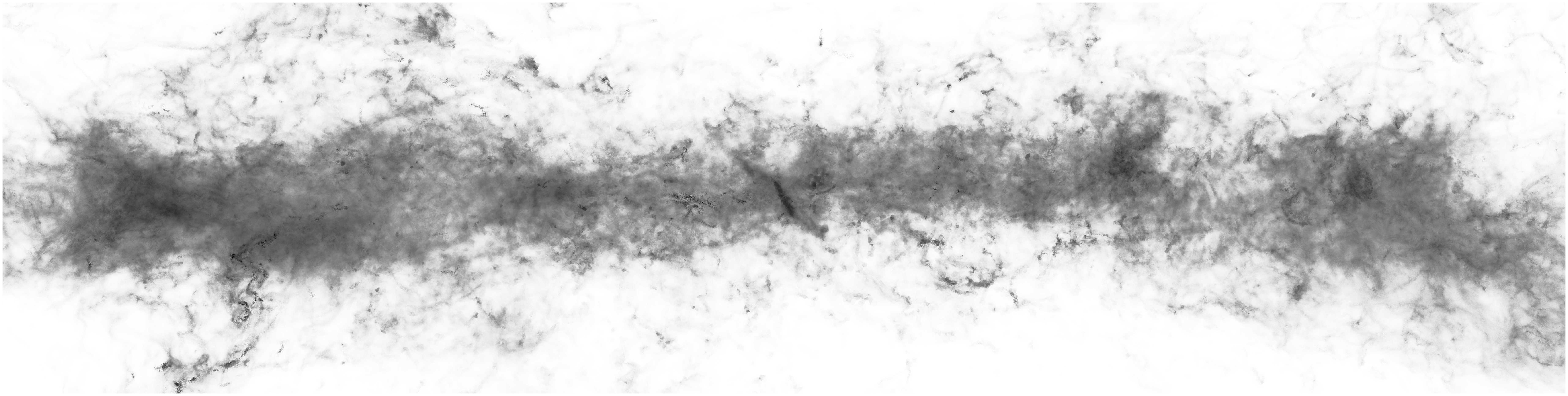
My past work has helped to uncover the hidden structure of our galaxy using physical simulation and simulation-informed ML for the analysis of astronomical imagery in the microwave spectrum.
I'm interested in ways that ML can improve capabilities in the domains of medical and scientific imaging and in advanced sensing techniques like passive radar for air/space-domain awareness.
I'm interested in new architectures for language models that enable more advanced AI systems. See my explainer on the role ML plays in AI research and the ongoing pursuit of AGI.
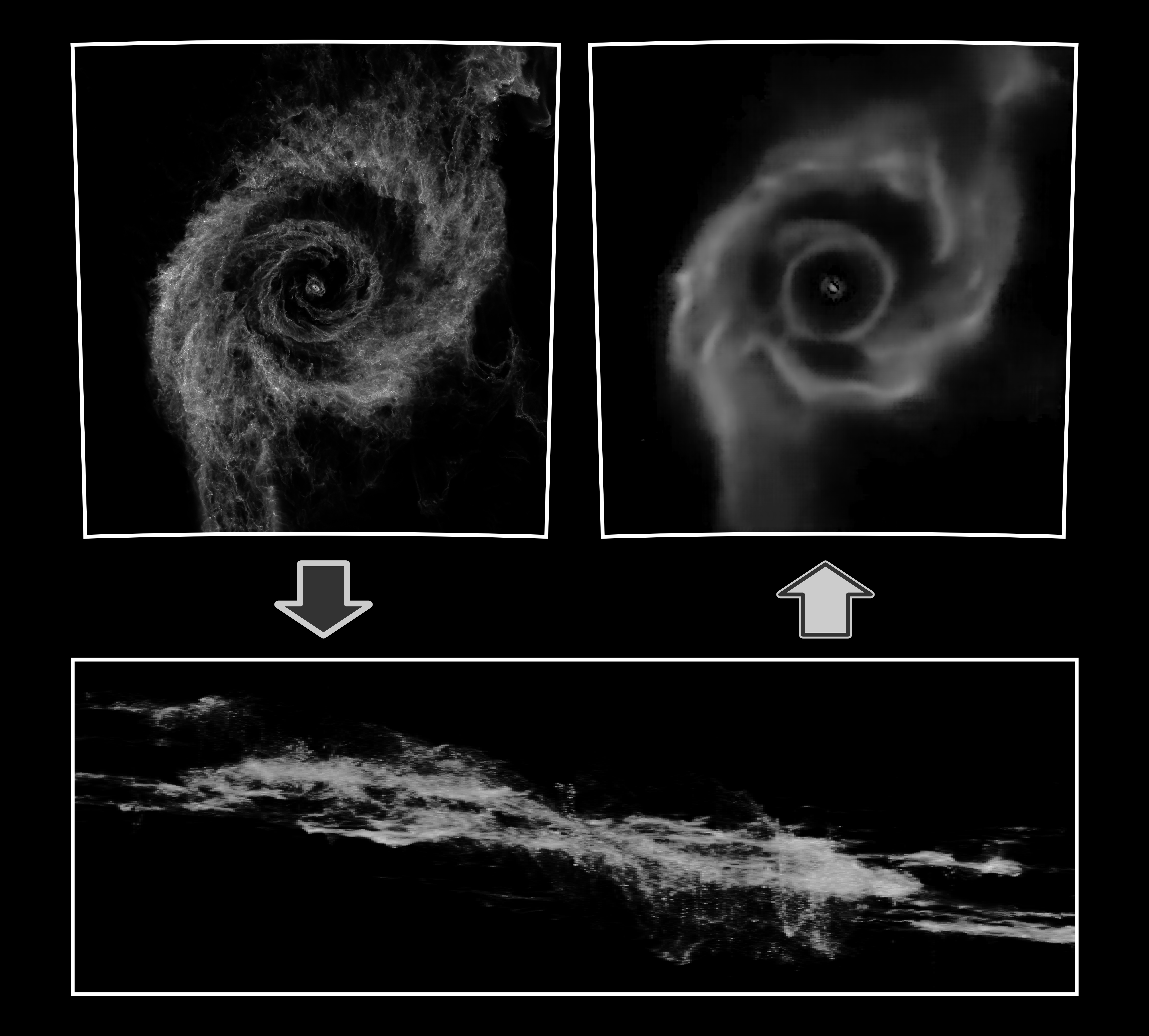
At the University of Connecticut, I led an international research collaboration aimed at using machine learning to uncover the hidden structure of our galaxy's center. The system that I developed for this collaborative project—Imagery Reversion Informed by Simulation (IRIS)—uses a deep convolutional neural network to infer spatial structure in microwave observations of our galaxy by training on simulations. The results of the IRIS project have been a resounding success, providing a new "bird's eye" perspective on our own galaxy and paving the way for a new program of research in understanding our galaxy's structure. As of July 2026, we are excited to present the preprint publication of our preliminary results, along with the entire IRIS codebase as an open-source repository on GitHub.
Our goal was to understand the 3D spatial distribution of interstellar material (ISM) in our galaxy's inner region. The challenge is that we are viewing our galaxy from an edge-on perspective inside the galaxy's own disk-like structure. Conjecturing that this 3D information is encoded somehow in the massive correlation of high-resolution spectral-line observations and advanced galaxy simulations, we sought to design an ML system to generate a top-down view (or density projection) of our galaxy by training on simulations.
I designed a deep convolutional neural network to transform edge-on observations of our galaxy into top-down density projections. I then trained this network on a massive dataset we generated from galaxy simulations before applying to real observations. To enable our data generation, I also developed a new code for the "synthetic observation" of spectral lines in our simulations. The IRIS synthetic observation code is fully differentiable in PyTorch and, through GPU acceleration, provides speedups in excess of 10,000x against established counterparts.
The official preprint release of our upcoming publication is now available on arXiv. All the IRIS code is available as an open-source repository on GitHub. Ongoing and future work on the IRIS project is housed at the Milky Way Laboratory at the University of Connecticut. Those interested in knowing more or collaborating on work relating to the IRIS project can reach out to the Milky Way Laboratory or contact me directly.